For the door you have been standing in front of.
Something has been agreed but not started. A role, a move, a conversation that ended with “let's revisit in spring”. You are not stuck — you are early, and the wait has gone on long enough that you have started to read it as a verdict.
Read the three that sound like this year.
- The thing is decided, and nothing has moved.
- You are preparing more than the situation requires.
- You have told fewer people than you expected to tell.
Pieces for this intention
3 pieces
 For exams
Free worldwide shipping over $99 · 1-Year Fortune Guarantee · Consecrated before it ships
The longer version
Jin, progress, is the sun rising over the earth — and it is the only progress hexagram that describes light rather than force. Nothing is pushed in Jin. Things become visible, and once visible they can be chosen. This is why the traditional advice attached to it is so unhelpful to anyone looking for a technique: the instruction is to be ready and legible, not to push.
The opposite mistake is reading Sheng, pushing upward, as the same thing. Sheng is wood growing through earth: slow, rooted, and almost boring. It is the hexagram of the thing you do on ordinary days. People who are waiting for a door to open usually need Jin; people who are already through it and want to keep going need Sheng. Wearing one while needing the other is why a piece can feel inert.
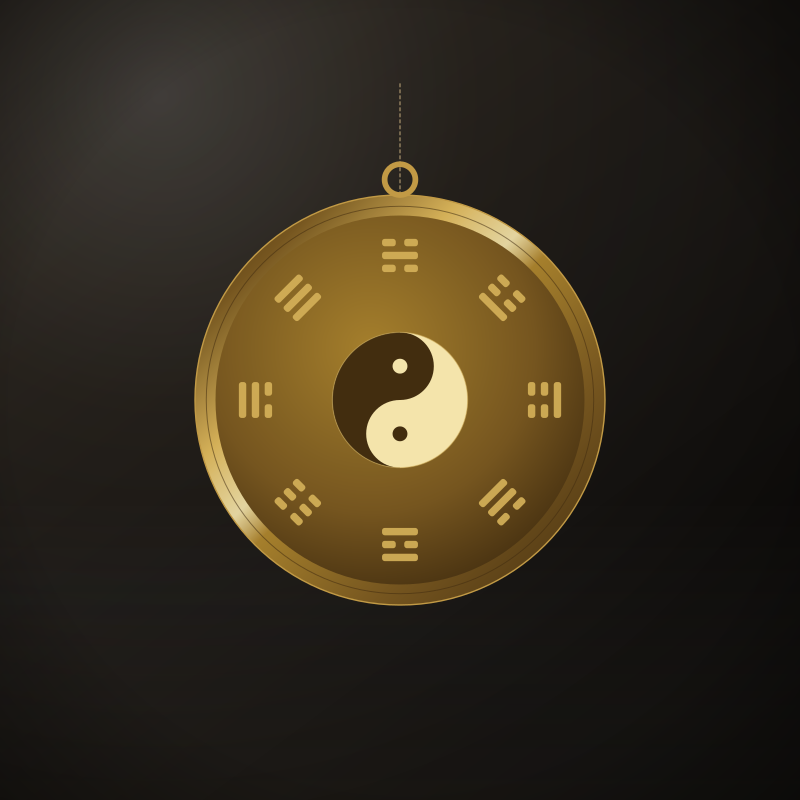
First Light is the Jin piece. Brass, deliberately unlacquered, so within about six weeks it darkens in the recesses of the trigrams and brightens on the rim — the patina is the record of your own handling. We do not polish it before shipping, because a piece that arrives already aged reads as a replica of itself. Two people wearing it end up with different objects.
The one thing worth saying plainly: rising hexagrams are the easiest to over-buy. If the door has not opened, a second pendant will not open it, and the collection has three pieces on this intention for people with three different situations. Read the rows above and pick the one that matches the situation you are actually in, not the one you would prefer to be in.
Asked and answered
Is there a correct way to wear a rising piece?
Traditionally longer, below the collar, so it shows when you move rather than constantly. The reasoning is that progress pieces should be read in glances. Practically, a piece you catch sight of occasionally is one you do not get bored of.
Should I buy this before or after a big decision?
After the decision and before the move. These pieces are for the gap, which is the part with no ceremony attached to it. Buying one to help you decide tends to produce a different, worse relationship with the object.
Why is brass not lacquered?
Because the patina is the point. Lacquer freezes the piece at the moment it was made; unlacquered brass records where your hand rests. If you want it bright again, a dry cloth restores most of it.