Two chambers, one neck — the shape of holding.
The gourd is a plant that dried into a container, then into a pun, then into a piece of jewellery. All three are still legible in the object.
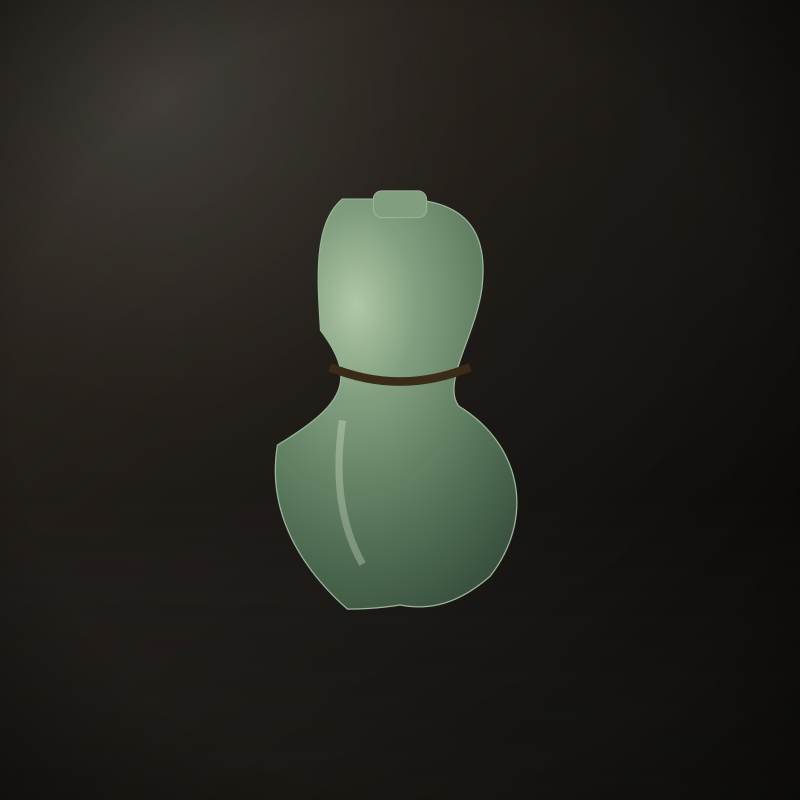
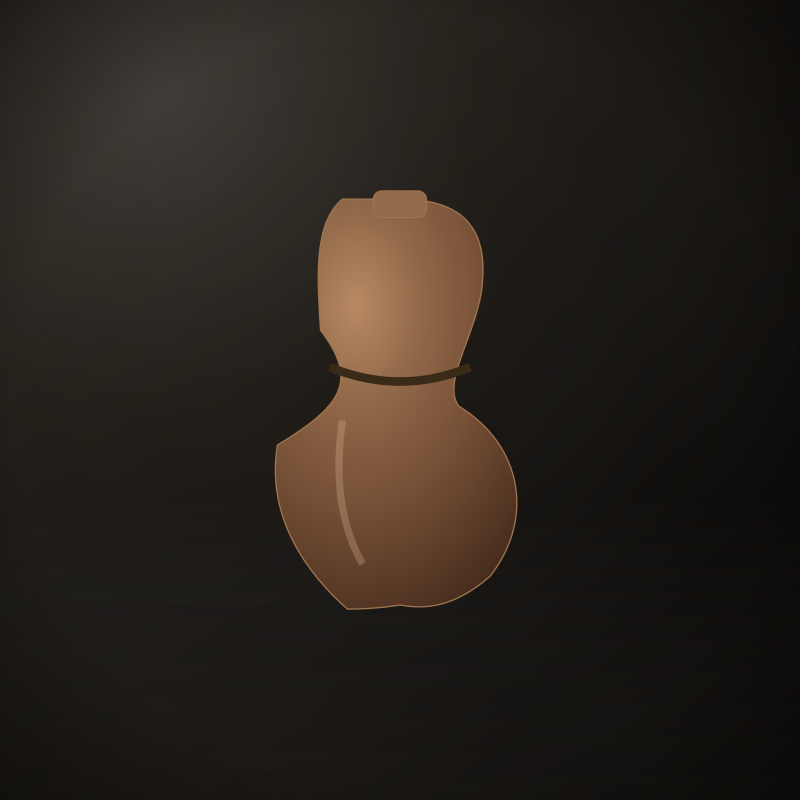
- 1Upper chamberThe part you grip. Small enough that the object hangs upright rather than swinging.
- 2The waistThe narrowest section, and where every material fails first — in clay, in jade, and in the plant.
- 3Lower chamberThe volume. Wide base, so it stands: a vessel reads as holding something before it reads as a symbol.
Who this shape is for.
- You are in a season of accumulating and want a picture of a container, not an arrow.
- You keep giving things away and would like one object that stays.
- You want something for a person who is ill, and want it to be about keeping rather than curing.
Pieces in this form
2 pieces in this form
Free worldwide shipping over $99 · 1-Year Fortune Guarantee · Consecrated before it ships
Where the shape comes from
Lagenaria, the bottle gourd, was one of the earliest cultivated plants in China, useful before it was symbolic: dried, it held water, seed, wine, and medicine. The physician's gourd, 懸壺, comes from a Han-dynasty account in which an old man selling medicine kept a gourd hanging at his stall and climbed into it at night; the phrase became the standard way to say that someone practises medicine. Daoist texts put elixirs in gourds. The auspicious reading is a pun before it is a doctrine: 葫蘆 sounds like 福祿, blessing and emolument, which is why the shape turns up on Ming lacquer and on a supermarket shelf in 2026.
The gourd's argument is architectural: two volumes with a narrow waist. Wide at the bottom, so it stands and holds. Narrow in the middle, so what goes in does not come out. Wide at the top, capped. That is a storage vessel, and the reason it reads as prosperity is not the pun but the silhouette — this is what plenty looks like when it is kept rather than spent. The waist is also the failure point in every material, which makes a gourd a test piece for a carver: if the neck survives, the rest of the object will. Ours are waisted slightly off-centre, because a perfectly symmetrical gourd looks manufactured.
We make it in two materials for two different reasons. In clay, the gourd is honest about being a vessel: unglazed stoneware, matte, porous enough that the colour changes where a thumb rests, and cheap enough to be an everyday object. In nephrite the same form becomes a test — a thin waist in a stone that will not take a chisel means abrasion, patience, and a high rate of loss. The jade version is the one people give; the clay one is the one people keep for themselves, which is a pattern we did not plan and have stopped arguing with.
A gourd is a pun, a vessel, and a plant that grows faster than anything else in the garden. Any of those is a reason to own one. If you want the 福祿 reading, it is a homophone and it is very old, and we are not going to pretend it is a secret. If you want an object that looks designed to hold rather than to display, this is the only piece in the collection that qualifies. What we cannot offer is a claim that the holding extends to your circumstances.
Asked and answered
Is it hollow?
The clay piece is hollow with a closed mouth — a vessel that does not pour. The jade piece is solid, because a hollow neck in nephrite at this size would be a different and much more expensive object. Both read as gourds; only one holds anything.
Should I put something inside?
No. A sealed gourd stays sealed. If you want to keep something in a piece, buy a locket — this is not one, and forcing the neck will break it at the waist.
Why is the gourd associated with medicine?
Because a dried gourd was a waterproof container, and because the 懸壺 story made it the sign of a physician's stall. The Daoist elixir association came later and borrowed the same object. Neither says anything about the shape's effect on your health.