Round heaven, square earth, one hole through both.
The cash coin is the only piece here that was, for two thousand years, ordinary. That is what makes it work: everybody handled it, so nobody had to be taught what it meant.
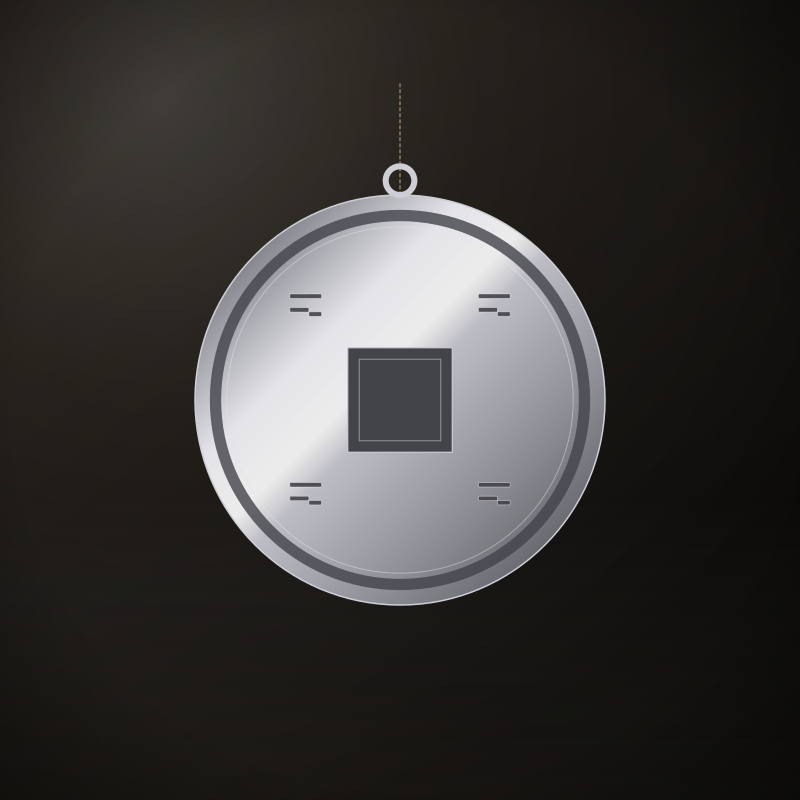
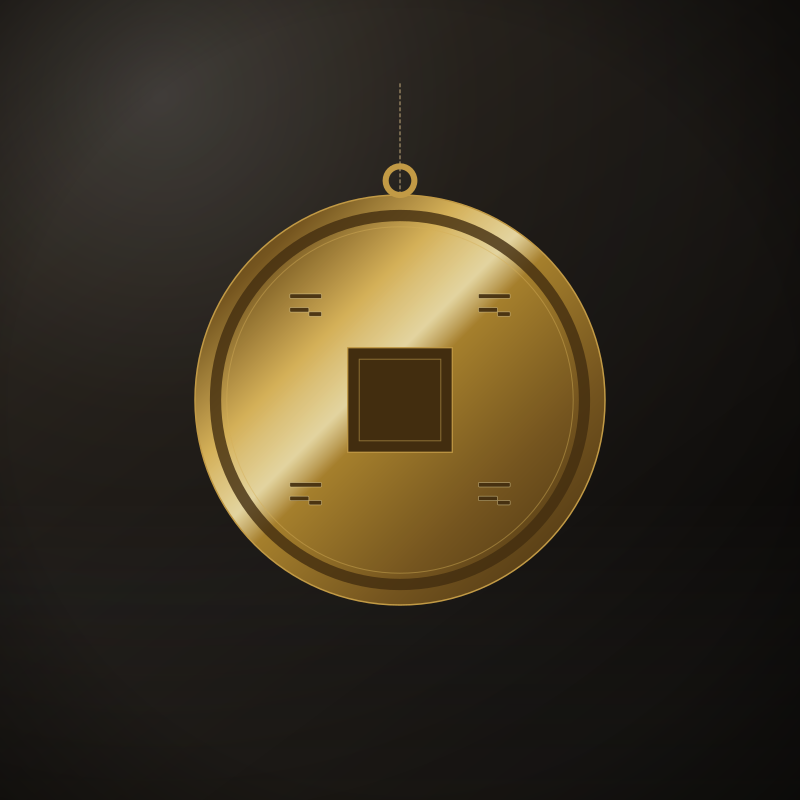
- 1Round rimHeaven above, in the Han reading. The form came first; the cosmology was attached afterwards.
- 2Square holeEarth below — and the cord that actually carried it. The hole is a handle before it is a symbol.
- 3Four charactersRead top, bottom, right, left. The inscription forces the eye around the hole instead of across it.
Who this shape is for.
- You want an object with a history longer than your family's.
- You like things that were once ordinary and became precious by surviving.
- You need a gift for someone who says they do not like jewellery.
Pieces in this form
2 pieces in this form
Free worldwide shipping over $99 · 1-Year Fortune Guarantee · Consecrated before it ships
Where the shape comes from
The state of Qin standardised a round coin with a square hole in 221 BC, and the form survived, with interruptions, until the last imperial casting in the early twentieth century. Coins were cast rather than struck, in moulds holding a tree of them that were broken apart and filed by hand. The square hole is not decoration: coins were strung on a cord to carry them, and the cord is the reason for the shape. The cosmological reading — round heaven above, square earth below — is a Han explanation applied after the fact, and it may or may not be what the founders intended. Both readings circulate and they do not conflict.
Four characters, one hole, two circles of meaning. The inscription is usually four characters read top, bottom, right, left, which forces the eye to travel around the hole rather than across the face. That travel is the design. A coin with a solid face reads as a disc; a coin with a hole reads as a ring that happens to be inscribed. The pieces you wear are 花錢 — charm coins, cast for amulets rather than for spending, which is why they carry eight trigrams and auspicious phrases instead of a reign title. A charm coin was never money. It was made to be kept.
Our first casting filled the four characters in bright metal and they vanished: the forty-five-degree specular highlight runs straight across the face and swallows anything lighter than the base. The fix was to cut them dark and leave a one-pixel bright edge, so the characters read as shadow with a rim. This is the sort of detail that only shows up when the object is photographed, and it is why the coin took three attempts. The hole was never a problem. A hole is always legible.
A coin is the least mystical object in the collection, which is the argument for it. It is a piece of civic design that outlasted every dynasty that issued it, and it says something concrete about how a culture thought about exchange: round, standardised, strung together, countable. If you want it for that, fine. If you want it because a coin worn at the waist is the oldest luck-object in the Chinese repertoire, that is also fine and it is documented. It will not make you money, and we would be embarrassed to suggest it would.
Asked and answered
Is it a real antique?
No. Ours are cast in brass and silver from new moulds using the historical form, then hand-finished. Antique charm coins are a market with a great deal of forgery in it, and a talisman you are afraid to wear is not a talisman.
Which side faces out?
The inscribed side, in our pieces, because the reverse carries the trigram. There is no rule — there is only what you want to look at.
Why brass and not gold?
Gold would turn it into an investment and change how you treat it. Brass darkens where you handle it, which is a record of use, and it is what the originals were cast in.
Where to go next
Meanings it serves
Other forms
The collection