Obsidian
Volcanic glass. Cheap, hard, and the only material here that reflects almost nothing back at you — which is why it reads as depth rather than as black.
- Type
- Volcanic glass, not a crystal
- Hardness
- 5–5.5 Mohs
- Origin
- Mexico, Iceland, Japan
- Ages
- No — it is inert
- Fails by
- Chipping at the edge
Pieces in this material
3 pieces
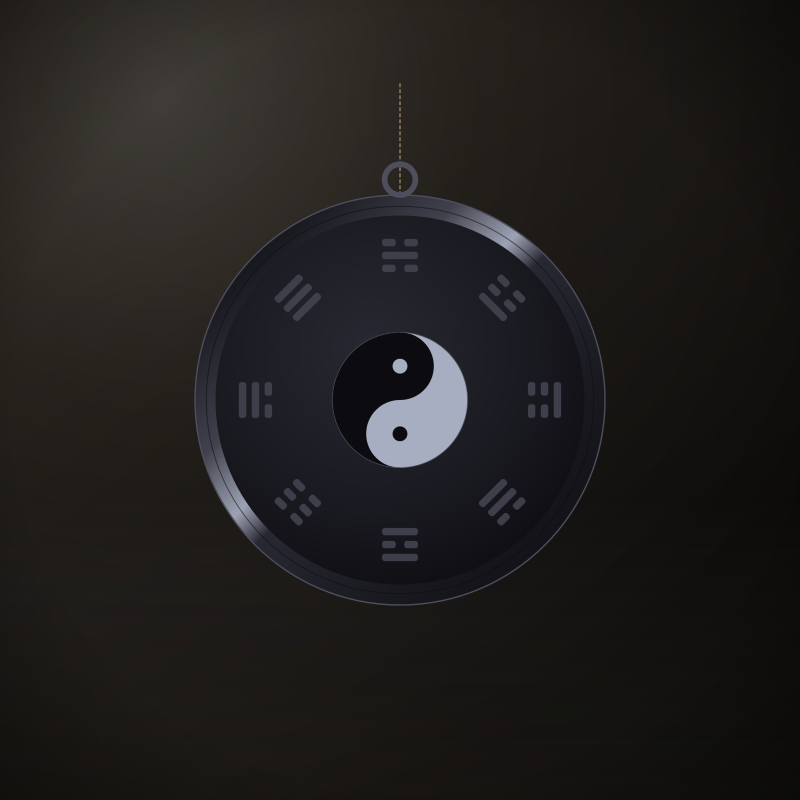 Most chosen
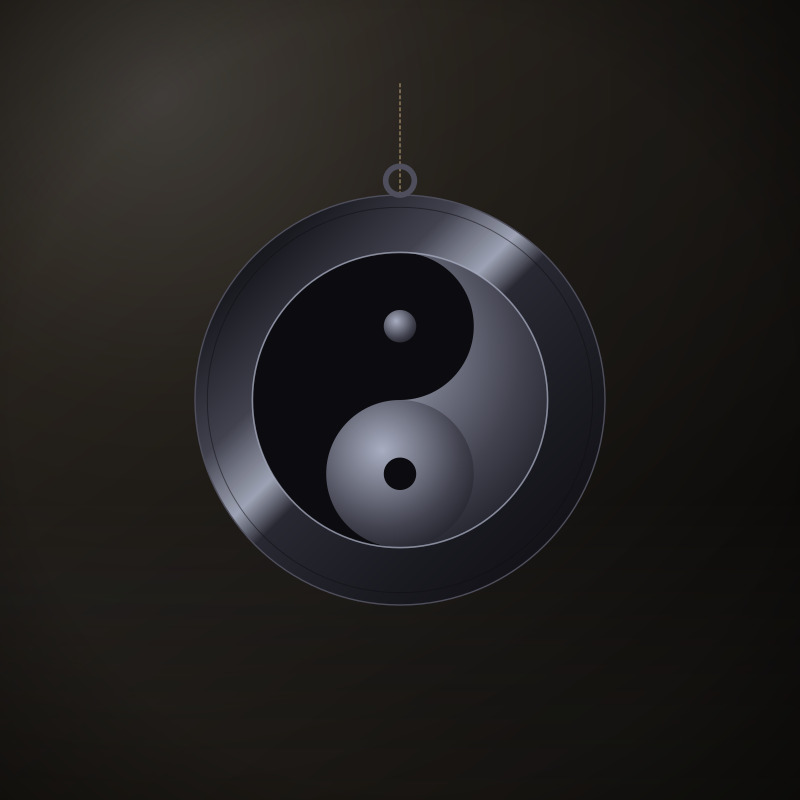 For exams
Free worldwide shipping over $99 · 1-Year Fortune Guarantee · Consecrated before it ships
The long version
Obsidian is what happens when lava cools faster than crystals can grow. There is no grain, no cleavage plane, and no internal structure to see — so the surface is either a mirror or a void depending on how it was cut. We cut ours matte, which gives a soft black that shows the carved trigrams only at an angle.
In the market it is often sold as protection stone, which is a claim we will not make. What is true is that it is hard, non-porous, and does not react with skin — practical virtues that make it a good pendant and a poor ring.
Care is short: no ultrasonic, no perfume, no chlorinated water. A dry cloth. Obsidian chips rather than scratches, so treat the edge as the fragile part.
Asked and answered
Is obsidian a crystal?
No. It is glass with no crystalline structure. That is why it is black and opaque rather than translucent.
Can obsidian break?
Yes — it chips at thin edges. It is harder than steel but more brittle.
Is black obsidian different from rainbow obsidian?
Rainbow obsidian has microscopic inclusions that produce a sheen. It is the same material with a different cooling history.